

An independent, ad-free leftist magazine of critical essays, poetry, fiction, and art.
-
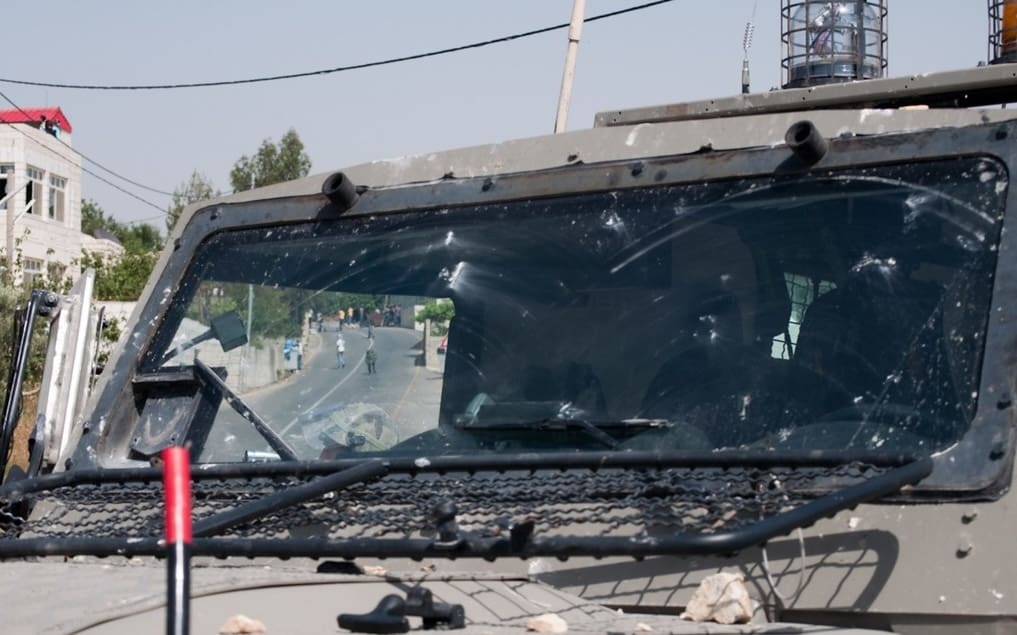
Poet Edward Salem’s “I Hid in the Bushes” narrates the speaker’s harrowing detainment by the Palestinian Authority after filming its collaboration with the occupation army.
-
In “A [Running] List…,” poet Angelica Whitehorne examines how capital’s detritus wreaks havoc on the digestive system.
-
Drawing on the work of Layli Long Soldier and Solmaz Sharif, Aerik Francis’s “Preamble” adopts the language of the law to expose its violent contradictions.
-

In “Poetry Begins at STOP: Etel Adnan & Arabic,” Huda Fakhreddine examines place, time, and anti-colonial memory in Arabic literature, concluding that “A poem in itself is survival, and a poem written post-extermination is a victory.”
-

Alex Tretbar’s “Sonnet With Congealed Labor In It” is a study in the poetics of work and a meditation on the work of making poems.
-

To commemorate the 110th anniversary of the Armenian Genocide, we’re honored to publish Nyree Abrahamian’s “The Six Villages of Musa Dagh,” a poem steeped in the long history of Armenian resistance to Ottoman-Turkish colonization.
-
In “Don’t Gentrify the Dreamless Hours,” poet Brian Duran-Fuentes lays bare the horrors of sharing an apartment with capitalists.
-

In “[year of the breakup, year of the family],” poet Adrian Matias Bell explores intimacy, loss, and the “winnowed dreams” that structure our lives.
-

In “Bushnell,” Filipino poet Pao Ching-ming reshapes Langston Hughes’s “Lenin” to memorialize Aaron Bushnell’s martyrdom for Palestine. We’re thrilled to publish his poem in both English and the original Tagálog.
-

Poet Ian Maxton’s “The Possession” roams across the “spooked-out American map,” surveying the machinery of empire and the scorched landscapes it leaves behind.
