

It was years after the fact—
“the fact,” in this instance, referring to the crime of European colonialism—
when we found ourselves on holiday in London, my sister and I,
whose English bore the cudgel of history.
Girls, not unlike us, once sold their dowry gold for bullets on the black market.
In a different country, in a different century, time passes us by in a blur of laughter,
and our teeth glint in the sun like pebbled jewels.
It was the final days of summer, and everyone was frenetic.
The political tension was taut as rope stretched between the enlightenment
and what preceded it — enough rope, perhaps, to hang oneself with.
Those days it wasn’t a rare occurrence for a boat full of migrants to capsize
off the coast of Libya, Tunisia, Madagascar, Djibouti, or to be intercepted
as it approached the shores of brutality.
In Alexandria, Nasser once said: It is impossible that history should repeat itself.
And still the dead ask: whose sea is this, whose strait, whose canal?
The man who drove us to the airport refused to accept our fare because
we reminded him of his daughters.
He asked: What brings you here? To this land of hunger and rain? I met his eyes
in the rearview mirror. The dawn had not yet broken.
On our flight home, the edges of the sky blurred against the Atlantic Ocean,
that country of salt and water that separates even what it binds.
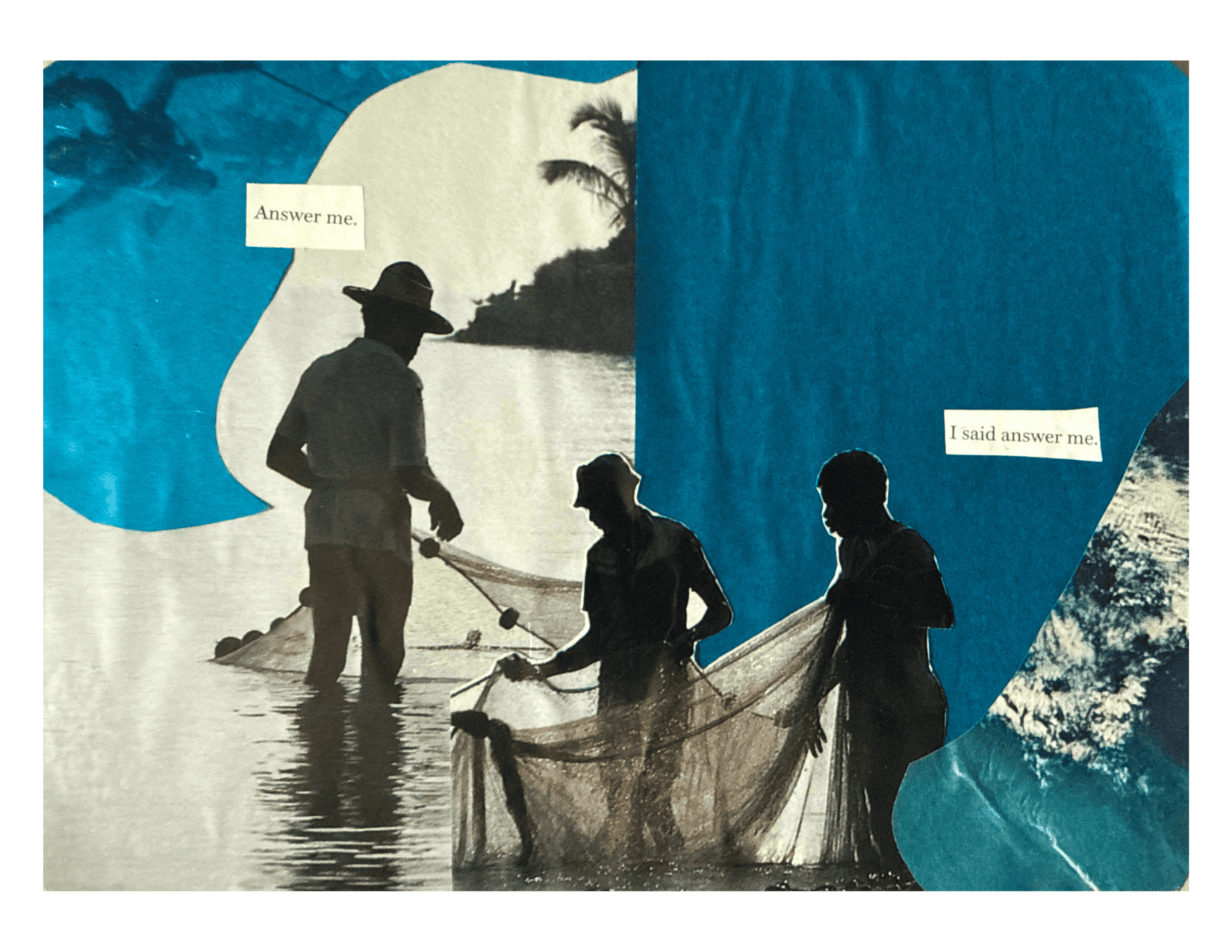
We did not know how to answer the man, we who had imagined ourselves
as guests and not trespassers.
We who, upon arrival, stood quietly in the customs line
waiting to be let in to our country of imports and exports, tariffs and taxes,
we who had nothing to declare.
