

Last year in June, Wells Fargo fired a dozen employees for tricking bosses into thinking they were working by using devices that “simulated keyboard activity.” One such gadget, known as a “mouse jiggler,” prevents a computer from going to sleep by moving the cursor around the screen. Jigglers are widely available online for under $10. Just don’t try to expense one.
Concerns about worker productivity surged during COVID-19 lockdowns. With managers forced to keep a safe distance from employees working from home, businesses deployed assorted digital tools to monitor them. In addition to tracking mouse movements, they logged keystrokes, emails, and app usage. More intrusive surveillance technologies also emerged, such as facial recognition software that gauged attention during virtual meetings and webcams that periodically snapped photos of employees. Debates erupted over the ethics of these tools, and many remote workers feared that “bossware” underreported their work. Measuring productivity through mouse clicks overlooked numerous tasks, including time spent working away from the computer. To meet performance targets, some employees reported skipping meals and extending their workday late into the evening. Still others sought out countermeasures, turning to TikTok and Reddit for tutorials on mouse jigglers, keystroke simulators, and even “Zoom presence” spoofers.
The capitalist workplace has always been an arms race, where managerial gimmicks for intensifying work are met by workers’ attempts to resist them. What distinguishes the present circumstances is that managers are increasingly physically distant from their employees, if not removed from the equation entirely. From call centers to coffee shops, software now handles innumerable tasks that were until quite recently reserved for human managers, such as scheduling shifts and issuing instructions. What does this new managerial regime mean for the future of work—and how might it shape opportunities for subversion?
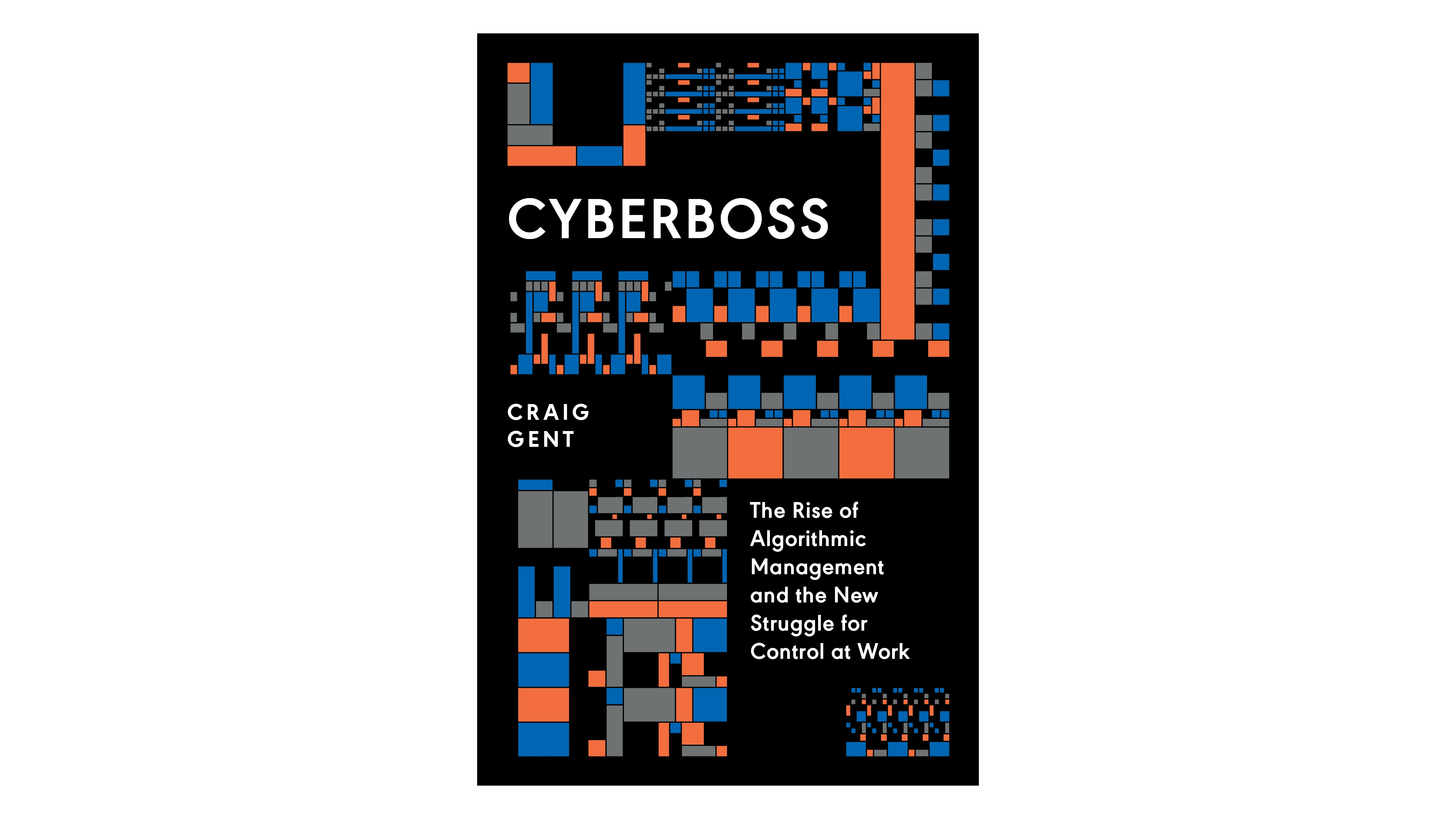
In Cyberboss: The Rise of Algorithmic Management and the New Struggle for Control at Work (Verso, 2024), Craig Gent looks to logistics workplaces for answers. As algorithmic management spreads across industries, its effects are most pronounced in distribution centers and delivery vans, where this novel mode of control has already taken root. Logistics, Gent contends, is not just a “pathfinder sector” for algorithmic management but a battleground, with the downstream workers—the ones who are tasked with storing, sorting, and delivering commodities—fighting on the frontlines against algorithmic intrusion. As digital technologies transform how workplaces are managed, workers must reassess whether their tactics of resistance are fit for purpose. In this fast-moving struggle, even mouse jigglers have a role to play.
Not since the 1911 publication of Frederick Winslow Taylor’s The Principles of Scientific Management have business consultants and corporate executives been as confident as they are today that managing workers can be reduced to a science—this time through algorithmic management. But bosses should beware: no balance of carrots and sticks can guarantee employee compliance. Workers are too stubborn, unpredictable, and crafty. Giving orders and ensuring they’re followed will always be a struggle.
If Taylor once promised that managers could tighten control over the shopfloor by deskilling workers and breaking their tasks into precise steps, algorithmic management represents the next order of magnitude in this transformation: removing managers from the picture altogether and replacing them with sophisticated software. As Gent succinctly defines it, algorithmic management is “a way of organising work in which workers are directed, monitored, tracked and assessed—all at once, in real time—by a computer system that doesn’t rely on a human manager to control it.” An Amazon fulfillment center may be “the archetypal algorithmic workplace,” but the tendrils of this managerial regime are now creeping into offices, universities, and even hospitals.
Most talk of algorithmic management, originating in business schools and the financial press, relies on a nebulous and exaggerated definition of “algorithm”—by hyperbole, the concept is elevated into an all-knowing mechanism of automated control. Any comparable real-world system instead consists of a far messier amalgamation of software and hardware. While Gent sticks with the term “algorithmic,” he largely avoids the mystification imparted to it by hype cycles and breathless boosterism, centering the bleak experiences of workers rather than the system’s supposed efficiencies. Notably, he shifts attention from computer code to the physical devices in the workplace that issue instructions, guide movements, and track productivity. Within algorithmic workplaces, “the supervisory burden” increasingly falls to scanner guns, wristwatches, and smartphones. These gadgets are the primary interface between workers and the system—the joints that both constrain and enable the labor process.
Beneath the sheen of technological novelty, algorithmic management is really a synthesis of a century’s worth of managerial ideology, melding Taylorist micromanagement with the worst tendencies of HR departments and Silicon Valley start-ups. In its fullest manifestation, workers are trapped in an endless present of repetitive tasks and strapped into wearable workstations that choreograph their every movement through time and space. Each lawn gnome sorted and every pizza delivered is transmuted into a relentless data stream, continuously feeding the inventory updates and workflow protocols that allow the loop to repeat indefinitely.
Employees of these workplaces may be acutely aware of being constantly monitored and appraised, and yet they have little choice but to conform to the prerogatives of the system: it tracks the performance metrics that are used to determine targets, productivity rates, and shift assignments. Nevertheless, many of its actual functions and variables—what actions, for instance, might cause a worker to receive a less favorable rating—remain hidden within inscrutable “black boxes,” generating a panoptic effect. Human managers may only surface to poke or prod at their employees; in some gig-based workplaces, flesh-and-blood supervisors are practically mythical—rumored to exist, but never actually seen.
By turning this cybernetic fever dream into reality, the management of people has never seemed closer to attaining the status of a science—or so its proponents would have us believe. Gent is rightly skeptical of the self-serving narratives that companies construct. Far from representing a step towards scientific perfection, algorithmic management is simply the latest episode in capital’s interminable struggle to subjugate labor. Gent describes it as a “mode of workplace politics,” rather than a science. To counter impressions of omniscience and total control, which demoralize workers as much as they boost stock prices, a shift in perspective is required. “What we need,” Gent writes, “is a political understanding of algorithmic management on its own terms.”
To deliver on that proposition, Cyberboss enters several logistics workplaces that operate at the tail end of the supply chain, where commodities are shuttled from warehouses to their final destinations. Gent recruits a handful of workers in Britain who recount their days and nights spent picking, sorting, and transporting—by bike or van—the steady river of goods that populate the landscape of contemporary capitalist society. By focusing on the experiences of those working at the coalface, he aims to uncover the cracks, glitches, and everyday acts of resistance that often escape the high-altitude perspective of many structural accounts on the left.
Cyberboss lands on an already-crowded shelf of books exploring downstream logistics workplaces. In some ways it’s missing the agitating punch of more muckraking accounts that foreground the stress, boredom, low pay, and hazards of such jobs. Those seeking a more granular description of the actual labor process would be well-served by other workers’ inquiries like Alessandro Delfanti’s The Warehouse or Callum Cant’s Riding for Deliveroo. But if Gent’s Cyberboss is a bit lacking in verve and detail, it compensates by the depth of the author’s commitment to uncovering how workers both cope with and subvert algorithmic management. Taking a cue from the militant Italian tradition of Operaismo, Gent aims “to unconceal the ongoing contingency of class struggle within work.” Rather than merely understand the transformed workplace, his goal is to empower workers to transform it themselves.
Gent’s intent in writing Cyberboss is “to change the way we think about digital technologies at work.” This requires pushing back on the narrative that jobs are threatened en masse by automation. As Gent puts it, workers at the end of the supply chain are not so much “being replaced by computers” as they are increasingly “being managed by them.” However, he also dispels the notion that the rise of algorithmic management is “a fait accompli.” New digital technologies are emerging so rapidly that the tumult can cloud the water, leading us to mistake flux for fixity. To cut through this confusion, Gent turns our attention to the glitches and acts of disobedience that reveal a more contingent state of affairs than corporate press releases would suggest. Rather than premature resignation to a still-indeterminate fate, Gent urges us to consider “what it means for technologies of control and communication to be sites of struggle and contestation.”
To observe that the cement on this path of technological progress is still wet is emphatically not to claim that these technologies are fundamentally neutral, and that they therefore might be repurposed to better ends. “What if,” Gent asks, “some new technologies are harmful not by chance but by design?” Cyberboss offers a pointed critique of those who believe that the technological infrastructures of Amazon and Uber, soldered together by the class interests of venture capital, can be seized and reoriented towards liberatory projects. Gent targets not only the boosterism of Silicon Valley but also the assumptions held by many of his potential readers. Borrowing the term from Operaismo founder Raniero Panzieri, he argues that this “objectivist” stance, in which the master’s tools appear tantalizingly useful, represents the “dominant way of understanding technology on the left today.” Gent should know: he has spent the past decade as an editor at Novara Media, working alongside Aaron Bastani, whose Fully Automated Luxury Communism is one of the purest distillations of left objectivism today.
Algorithmic management isn’t designed to boost productivity so much as to turn workers into paranoid androids—malleable, interchangeable, and disposable. Control is hardwired so deeply that the system’s usefulness beyond churning out a workforce of replaceable cogs is doubtful. But what of the tools enforcing this emerging regime of computerized discipline? Scanner guns, smartwatches, and other devices may one day be used to distribute goods more fairly, but that remains a possibility, not a given. Anything worth salvaging from this shopfloor infrastructure will only emerge through sustained struggle, not piecemeal tinkering. Cyberboss charts a careful course between the Scylla of technological fatalism and the Charybdis of techno-optimism, with Gent insisting that the potential horizons of algorithm management are neither self-evident nor opaque: “Technology is always subject to ongoing class struggle.” Even machines engineered for immiseration—encoded with a hierarchical, authoritarian logic that renders them beyond redemption—can always be slowed down, hacked, sabotaged, or, should the day arrive, abolished.
I’m sympathetic to Gent’s brand of “technological politics”—but unfortunately, Cyberboss does risk leaving readers adrift. It offers too few guideposts for navigating the current terrain of struggle. The problem is largely one of scope: Gent makes bold assertions about the pace and impact of technological change across logistics, yet he restricts his gaze to warehouses and last-mile delivery routes. Crucial sectors such as ports, shipping, and rail are entirely absent. This narrow lens would be less of a concern if his conclusions were tempered accordingly. Instead, he extrapolates from a limited set of workplaces in Britain to make sweeping assertions about the global logistics industry.
Compounding this is a lack of historical grounding. Cyberboss provides no long view—neither on the development of algorithmic management nor on prior waves of worker resistance to technological innovation in logistics. Readers are dropped into the struggle in medias res, and at one end of the supply chain. This ultimately undermines the book’s “empirical investigation” into the past, present, and future of logistics work. The only remedy for these missing ingredients is to maintain some degree of skepticism toward Gent’s more expansive claims. Any criticisms that follow are not intended to dismiss the prescriptions offered in Cyberboss outright, but rather to invite debate over the underlying diagnosis.
“Can workers fight back?” Although this question, posed by Gent early in Cyberboss, may seem rhetorical, he responds: “The answer to that is not straightforward.” Nevertheless, as Gent goes on to show, workers are already resisting algorithmic management—just not necessarily in the ways we might expect.
Gent’s assessment is as follows: algorithmic workplaces reveal major shortcomings in the trade union movement’s longstanding strategic priorities, forcing a reevaluation of the effectiveness of their corresponding tactics. He contends that unions, in Britain and beyond, long ago surrendered control over the labor process, including decisions about workplace technologies, to secure recognition and contractual gains. Consequently, when algorithmic management began to reshape workplaces, unions were caught unawares. Now on the back foot, they find themselves negotiating over the fairness and safety of these technologies—haggling over the ergonomics of wearable workstations, for instance, instead of questioning whether they should be introduced at all. Gent is scathingly dismissive of the suggestion that unions might compromise on these matters, asserting that there is no “amount of job security or mending wages that will mitigate algorithmic management itself.” The most powerful demand, he argues, would be to suppress these technologies.
Short of an outright ban, however, Gent urges workers to push for greater “control.” What winning control would look like is not fully spelled out in Cyberboss—an openness Gent frames as a virtue. The “messiness and malleability” of this demand, he suggests, allows it to be adapted to the rapidly shifting conditions workers face. One thing, however, is certain: when Gent speaks of “the struggle for control at work,” the horizon that he envisions does not resemble a worker-run factory in the council communist tradition so much as a workers’ co-operative. Rather than seizing distribution centers or commandeering platform apps, Gent imagines workers being empowered to determine for themselves how best to pick stock and complete deliveries. Control, in his view, involves cultivating workplaces where workers have “agency” and feel “respected.” There’s no interrogation of the actual societal necessity of businesses like Deliveroo or UberEats; instead, he invokes the possibility of “good work” while balking at those on the left “who seem happier talking about the politics of anti-work” than “what it feels like to have your dignity stolen at work.”
This line of reasoning risks elevating existential alienation above economic exploitation as the defining feature of work today, while overlooking capital’s historical willingness to grant limited workplace automony in exchange for shelving bread-and-butter demands. One danger in Gent’s call for “control” is that its logical conclusion may involve unintended trade-offs—dignity in place of better wages, agency instead of improved health and safety, respect at the cost of job security. Such compromises are not only unnecessary but also hazardous, especially in already precarious, low-paid sectors. It remains unclear whether Gent believes that achieving such control would require dismantling workplaces that are built on algorithmic management. If that is indeed his ambition, it is puzzling that he does not state it more explicitly.
Those familiar with the labor history of the logistics industry might be surprised by Gent’s claim that “technological innovation has seldom registered highly among the priorities of the organised labour movement.” To support this point, Cyberboss closes with an epilogue praising the Writers Guild of America (WGA) for being “far in advance of the rest of the trade union movement” by making the ban on generative AI in screenwriting a key demand during its 2023 strike. As evidence that unions have historically sidelined concerns about workplace technology, he points to the postwar American auto industry.
Yet Gent makes no mention of the fact that logistics workers themselves have long centered their struggles on technological change—most notably the epochal battles over containerization at ports worldwide from the late 1950s through the 1970s. For example, in 1968 the Transport and General Workers Union launched more than two years of sustained industrial action to resist the introduction of shipping containers at Tilbury Port, near London. While containerization differs from algorithmic management, it too transformed logistical work—and, indeed, the global economy. Without taking anything away from the WGA’s fight, one might ask: aren’t the lessons from past struggles over technological innovation in logistics—dispiriting though they are—just as instructive as those waged by Hollywood writers today? Moreover, the line of continuity between the past and the present is clear: mere weeks after Cyberboss was published last fall, 47,000 workers in the U.S. went on strike at dozens of East and Gulf Coast ports, through which more than half of the country’s cargo traffic passes. Their headline demand was a ban on new automation technologies on the waterfront.
Nevertheless, Gent’s concern that unions are “simply failing to adapt to the new conditions of work” is a valid one. Drawing on the “class composition analysis” of Operaismo—a framework that regards no aspect of class struggle as sacred—Gent concludes that the trade union movement’s tactical repertoire has not kept pace with the realities of algorithmic management. He specifically questions the continued effectiveness of traditional tactics like slowdowns and strikes, which depend on workers withdrawing their labor. “Strikes may be the primary tool in the arsenal of workplace resistance,” he writes, “but in algorithmic workplaces they are liable to be undermined by the very systems that govern the work.” Gent suspects that algorithmic management, with its precision in getting the right thing to the right place at the right time, is particularly adept at responding to disruptions as they happen.
What if a work process was robust or smart enough to fill gaps in labor, or redirect work processes to other locations in real time, even if the barriers to organizing strike action were lower than they are? Would we still view strikes as the culmination of workers’ power and agency?Algorithmic workplaces are typically designed to handle high worker turnover; in fact, many downstream logistics businesses even rely on some degree of sustained churn to adjust to fluctuating customer demand.
But this does not mean that such workplaces are, by technological design, immunized against strikes. Cyberboss doesn’t include any examples of distribution centers or courier services successfully using their algorithmic infrastructure to circumvent such industrial action. Some of Gent’s interlocutors recount failed strikes and slowdowns, but none mentioned were directly thwarted by the prowess of computerized managers. Instead—and as Gent notes—these efforts faltered for a more familiar cause: insufficient worker participation.
Even in theory, an Amazon fulfillment center is not impervious to strikes, albeit for reasons different from those in a writers’ room at Amazon Studios. Global supply chains, which have been built up in part to shield the manufacturing industry from worker demands, remain susceptible to disruptions at the chokepoints through which goods flow. The distribution hubs and last-mile delivery routes that interest Gent are geographically fixed, making them difficult—if not impossible—to relocate or bypass. For example, Amazon operates only a handful of fulfillment centers in Southeast England, which constrains the company’s ability to reroute goods bound for London in the event of a disruption. Thus, an impactful strike at one of these downstream chokepoints is far from implausible—or, if it is implausible, it’s not for the reasons Gent suggests.
As indicated by the uneven successes in organizing Amazon workers, the primary obstacles to strikes at the company are not technological. Gent acknowledges the decline in union membership across sectors and the steady taming of unions by capital in recent decades. Is it a certainty that we can attribute the diminishing power of strikes to the rise of management-by-algorithm? By overestimating the ability of cyberbosses to outmaneuver incalcitrant workers, Gent risks committing the very error he cautions against. What if the more pressing misconception plaguing class struggle in an age of algorithmic management is not an unshakable faith in strikes, but the enduring assumption that the workplace remains the primary battleground?
Given the extent to which algorithmic management is reshaping workplaces, Gent argues that workers must think more “creatively” about the tactics they use to resist. Rather than leaving this task to union leaders or professional organizers, he encourages us to look to the workers themselves, who both grasp the inner workings of these systems and are already experimenting with ways to disrupt them. Algorithmic management seeks to calibrate not only movements and gestures but as much of an employee’s subjectivity as possible to prescribed shopfloor rhythms. Yet in doing so, it also produces workers uniquely positioned to turn these controls back against management.
Gent highlights instances of “accidental resistance,” when workers exploit downtime from system glitches, as well as more deliberate actions such as slowdowns and wildcat strikes. He reserves his greatest enthusiasm for “individual acts of insubordination” that allow workers to reclaim “time, autonomy, and in some cases, their dignity.” He tells of workers eating on the job, hacking their handheld scanners to take unauthorized breaks, falsely reporting missing items to avoid handling them, and dragging their feet to bring down productivity targets. In one amusing anecdote, a supermarket picker named Todd tells Gent that he marks any ordered DVD as out of stock so he can substitute it with Rogue One: A Star Wars Story—“because it’s a sick film and everyone should see it.”
Gent deserves credit for treating otherwise fleeting acts of disobedience with respect rather than contempt, searching for seeds of broader subversion within them. Regarding Todd’s intervention, Gent invites readers to appreciate the shopfloor knowledge it requires, the disruption it causes to stock counts, and the levity it brings to an otherwise deadening workday. Small instances of insubordination like this expose a central function of algorithmic management: not simply replacing human managers, but enforcing predictability in the labor process. One malcontent swapping out a DVD may seem trivial, but if this action were “scaled up or generalised across a workforce as part of a collective endeavour,” the impact could be substantial. The same goes for the clever countermeasures workers are deploying against algorithmic management elsewhere. What if we viewed the popularity of mouse jigglers not as evidence of individual laziness, but as an expression of diffuse, simmering political desire?
It is hardly novel to say that workers, by virtue of the knowledge accumulated through their daily presence in the workplace, are uniquely positioned to subvert the labor process in which they are trapped. What demands closer attention, however, is the extent to which the algorithms that govern work spill over and converge with those that increasingly shape life beyond it. Is this merely the latest iteration of a long-familiar blurring of work and non-work, updated for the 21st century? Or does it mark a qualitative shift in the terrain of class struggle? And if the latter, what does this mean for the possibilities of subversion—not only within the workplace but across everyday life? Gent never poses such questions, so tightly is his gaze locked on the shopfloor.
Still, Gent is rightly energized by inventive acts of disobedience and the new spaces workers have discovered to share knowledge, swapping picket lines and water coolers for Reddit and Discord. Where others might see pranks or larks, Gent identifies “clear evidence of an untapped reservoir of feeling that we should seek to harness.” But it’s worth pausing for a moment on this use of “we,” reflecting as it does the book’s overall tone toward its supposed protagonists. For all the hope Gent places in the spontaneity of workers, he consistently presumes that the most meaningful action will only come via a harnessing from the outside. On one hand, this shows a commendable wish to empower workers as a collective force. On the other, it perpetuates a longstanding assumption on the left that an external entity with a readymade agenda, like a union or party, is necessary for organizing workers who may otherwise have trouble doing so on their own. If the circumstances workers face have changed so drastically that our strategies and tactics need rethinking, then our existing forms of organizing—including whether formal structures are even necessary—deserve the same scrutiny.
Gent is optimistic that individual acts of “everyday resistance” can “over time” bloom into a “workplace counterculture.” The issue is that algorithmic workplaces in logistics are literally engineered to keep workers apart, when not rapidly cycling through hirings and firings. To bolster his assertion, Gent marshals a motley corps of theorists, from Mario Tronti to James C. Scott—all of whom, however, stress the amount of time needed for commonality to grow from discrete instances of insubordination. This is not to suggest that subversive shopfloors cannot develop in distribution centers. As Cyberboss shows, workers are already collectively sabotaging stock counts, sharing scanner codes stolen from supervisors, and plotting online what else they might do together. Yet, in an era of world-historic uprisings and rebellions targeting logistical infrastructure like ports, pipelines, and highways, it’s hard to shake the feeling that Gent is scraping the bottom of the workplace barrel for ideas to disrupt supply chain capitalism.
In challenging the “common sense” that strikes remain the gold standard of class struggle, Gent touches on a rich conversation about counter-logistics, though only in passing. He acknowledges that “a growing number on the left wish to see social movements emerge around the logistics sector,” but cautions, “My belief is that this cannot be achieved without engaging with logistics work itself.” Presumably among this “growing number” are writers like Jasper Bernes, Charmaine Chua, Deborah Cowen, and the late Joshua Clover, who have each scrutinized the horizons of workplace politics with an eye toward understanding the popular resurgence of tactics targeting logistical infrastructure—blockades, occupations, and riots. For these thinkers, the rise of logistics demands a broader view, one attentive to how workplace struggles interface with, and are sometimes eclipsed by, street-based social movements. Gent, by contrast, doubles down on the workplace as the primary (if not exclusive) arena of struggle, generally looking past the political possibilities that might emerge from the intersection of labor struggles with movements beyond the shopfloor.
Despite Gent’s stated aim to steer clear of “algorithmic tunnel vision,” his tight focus on “algorithmic workplaces” does seem to ultimately result in a certain degree of myopia. By concentrating on resistance to “algorithmic management infrastructure,” he risks disregarding how the wider logistical infrastructure system is already a terrain of conflict, even for those not employed within it. To be fair, there are moments in Cyberboss when Gent notes the existence of counter-logistical struggle outside of work. Here’s one:
“In response to the increasingly logistical character of the organisation of global capitalism, social movement actors have focused their energies on ‘blocking’ supply chains through occupations and blockades.”
And here’s the next, some 200 pages later:
“Contemporary activist responses to the organisation of the distribution sector and the phenomenon of logistics often focus on the possibility of locating leverage—or ‘fault lines and weak points,’ as the Transnational Social Strike Platform puts it—where workers might concentrate power to tip the balance of control in their favour. Logistics acts as a fulcrum within the wider economy, and such a strategy is an attempt to use this to the advantage of workers. As a strategy, however, it falters against the scale of managerial control. This forces many organisers to settle on the contractual aspects of working conditions as a predicate for effective future action. But, as we have seen, there is little to stop companies simply discriminating against workers.”
I include these passage in full because, even as Gent recognizes logistics as a terrain of struggle, it’s evident there’s a certain contortion of perspective happening, until only the workplace remains in view.
It’s true that transport workers like longshoremen have long used their positions at logistics chokepoints to win contract gains. Yet many of these same workers have also leveraged their power to support other struggles—from dockworkers who refused to handle cargo headed for apartheid South Africa in the 1980s to those who walked off the job in solidarity with Black Lives Matter. More recently, transport workers around the world have coordinated actions to block shipments of equipment bound for use against Palestinians in Gaza, often in defiance of union leaders—and some of the rank-and-file—still invested in servicing Israel’s machinery of genocide. Nor are they alone: since the war began, activists have blockaded ports, ships, and roads leading to weapons manufacturers, while Ansar-Allah has disrupted commercial traffic through the Suez Canal by attacking tankers and container ships in the Red Sea. Such actions show that logistics is more than a workplace battleground; it is a hinge connecting and amplifying struggles across the globe.
Cyberboss outlines how workers are already resisting algorithmic management inside logistics workplaces, offering valuable insights into how power might be reclaimed in other sectors as well. Yet as an account of today’s shifting terrain of class struggle, it ultimately falls short—not only because Gent overstates the role of algorithms in undermining collective action. He is right to center logistics workplaces, but this focus does come at the expense of a fuller consideration of how logistics has become a vital front for global social movements—whether in the fight for Palestinian liberation or against oil pipelines threatening Indigenous lands. We need books like Cyberboss that doggedly track how people resist supply chain capitalism from where they’re best positioned to act. Still, a piecemeal approach risks losing sight of the bigger picture. If we are to create the conditions for a life worth living, we must do our utmost to imagine how a multiplicity of different struggles can be woven together. ♦
