

and zoomed in with my old camcorder,
filming Israeli military personnel
training Palestinian security forces
how to suppress protests and uprisings
at a secret location in the pixelated night.
Palestinian guards caught me.
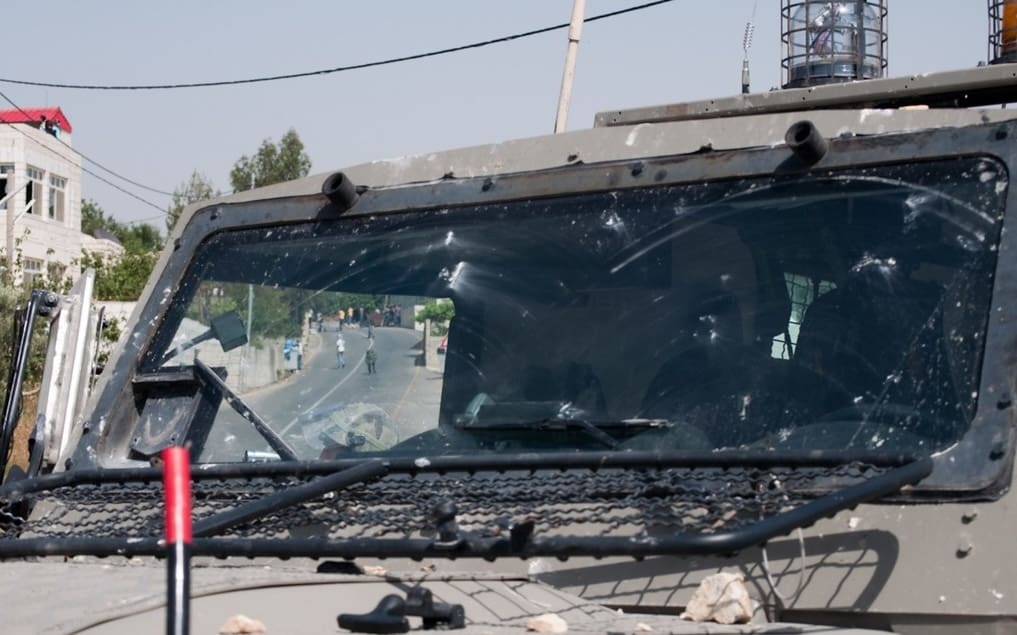
They threw me in the back of a jeep,
speeding to a nondescript building
where it seemed that there were no Israelis.
For this I was thankful. Still, I was scared.
They held me in a cinderblock room
with a framed 8×10 of a smiling Arafat
and prayer mats slumped in the corner,
handling my camcorder like a Rubik’s Cube,
jabbing at buttons on the viewfinder
trying to delete what I had recorded.
My mind raced with horror stories.
I feared being beaten. I feared sleeping
on a cold concrete floor where insects
roamed free. Now that they had my phone,
they had my contact list, and my wife
would be terrified when I didn’t come home
without calling—that’s how I figured my way out.
I blurted that I had “private” pictures of my wife
on the camcorder. I apologized for speaking of
something ‘ayb, but my desperation implied
that I cared less about protecting myself
than my wife’s honor,
which threatened to implicate them
in dishonor. Their faithful faces went blank.
They scolded me that as a man, as a husband,
I should never keep such pictures on a camera.
What would happen if you lost it?
Blushing, they handed the camera back,
had me delete in front of them my grainy videos
of their collaboration with our neighbors,
then walked me by the arm outside to the jeep
and dropped me off downtown unharmed,
a twisted gratitude in their indignant eyes.
