

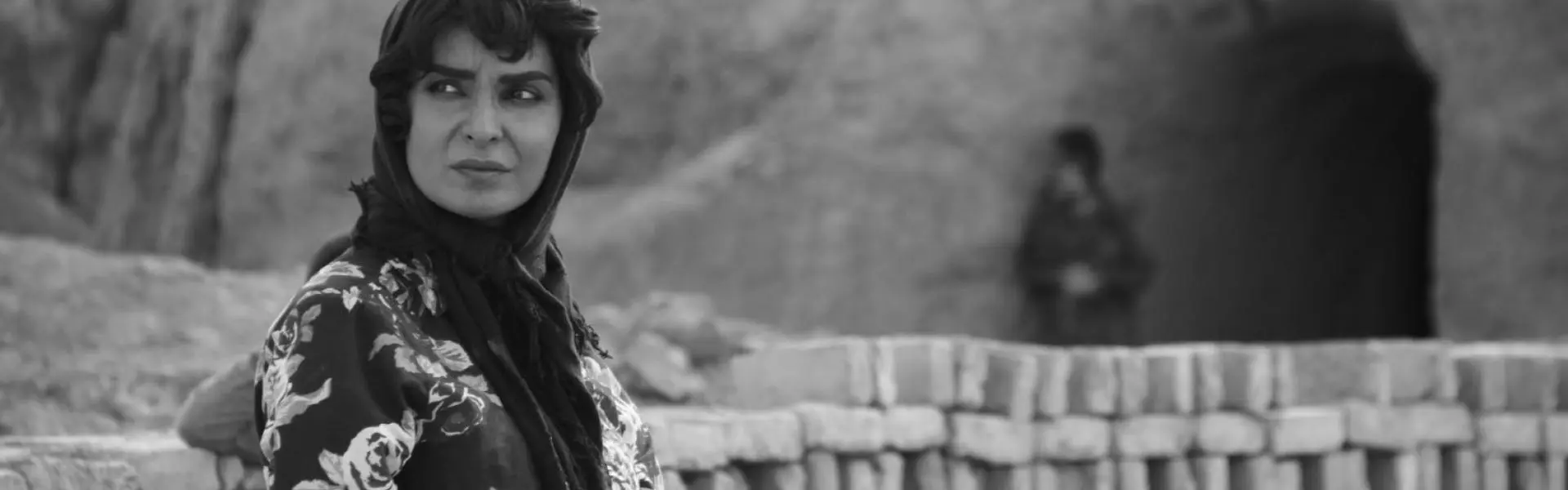
“Everything’s in ruins, everything’s been degraded, but I could say that they’ve ruined and degraded everything, because this is not some kind of cataclysm coming about with so-called ‘innocent’ human aid; on the contrary, it’s about man’s own judgment over his own self, which of course God has a big hand in, or, dare I say, takes part in, and whatever he takes part in is the most ghastly creation that you can imagine […] because for this perfect victory it was also essential that the other side, that is, everything’s that’s excellent, great in some way and noble, should not engage in any kind of fight, there shouldn’t be any kind of struggle, just the sudden disappearance of one side meaning the disappearing of the excellent, the great, the noble, so that by now the winners who have won by attacking from ambush rule the earth and there isn’t a single tiny nook where one can hide something from them because everything they can lay their hands on is theirs, even things that they can’t reach but they do reach are also theirs; the heavens are already theirs and theirs are all our dreams; theirs is the moment, nature, infinite silence; even immortality is theirs, you understand?; everything, everything is lost forever…”
Béla Tarr’s The Turin Horse (2011)
There used to be a time in which we dreamt of the future. It is difficult to pinpoint when exactly so much of the world turned its eyes from what was to be to what is only now. One cannot help but notice that predictions of incredible societies and vast new frontiers have either evaporated into the ether or become the sole province of delusional Silicon Valley glory-hounds. The future is now something to be feared, in seemingly all its possible forms. Wondering whether we may one day live without want has been replaced with the worry that we may not even retain what we have today.
This feeling of malaise and incapacitation has spawned a wave of films that seek to make sense of a world where hope for the future, any future, has been irreparably altered, even lost. Washed-out color palettes and stern faces, and the reworking of older, previously joyous material into cynical, bitter pieces that espouse a basic social commentary, but mostly revel in their own self-important dourness, abound. Most recently (backed by those very same forces of capital that leaned heavily and profitably into so-called “gritty reboots”), there has been a movement to reemphasize positivity: that constant imperative towards “earnestness” buzzing around our skulls, entreating us to be happy.
Both of these approaches still feel as though they are failing our current moment. These approaches produce an art that seeks to make sense of our circumstances either through shallow critique, willful ignorance, or an analysis so pathologized that it becomes meaningless. Iranian film in particular has felt the grim side of these currents, dominated as of late with grim, bitterly realistic, and wholly depressing films, which bathe in the misery of the human condition but seem to only scratch the surface.
There is, however, a strange value in a film that slips beneath the frozen water, cuts through the ice from below, opening an unbridgeable gap. Rather than wallowing in pure negativity or blindly pushing cloying positivity, such films sit uncomfortably in our age’s aesthetic dialectic. For a time, Hungary’s Béla Tarr was the torch-bearer of this bitter realist movement. Shot in alternatively dulcet and harsh tones of black-and-white, Tarr’s characters live within conditions of endless agony and strife, constantly searching for scraps of the world that used to exist but which now—because of its sins—remain only in the memories of memories. They trudge through mud, through blank hills, through empty villages, always hoping for a renewal that never comes. As they wait, they are slowly broken down until, as in Tarr’s final film The Turin Horse, the very Earth itself recedes into nothingness, and even light ceases to exist.
After Tarr retired from making feature films in 2011, others took up his mantle. One was Hu Bo, Tarr’s Chinese protégé, who unfortunately passed away after making An Elephant Sitting Still, one of the defining slow cinema pictures of the generation. Another is Iran’s Ahmad Bahrami, a contemporary master who remains little-known in the West.
The common tropes of Iranian film are still very much present in Bahrami’s work. A focus on the rural areas of Iran, the concerns of its folk, the dynamics of familial conflict, and the innocence of children. The influences of the French New Wave and Italian neorealism course through the work of revered Iranian directors like Abbas Kiarostami and Asghar Farhadi—but it is Béla Tarr who has most influenced Bahrami, and the latter refashions these familiar tropes and renders narrative out of their desiccated shells.
In Bahrami’s The Wastetown, the ghost of industry is even more degraded. A woman who has been released from prison searches for the child that she had to abandon, looking through a junkyard away from civilization for any information that may pertain to their whereabouts. At every turn, she is exploited, taken advantage of by men belonging to the business—each with their own diminishing power. She herself cannot imagine any other way of procuring the information she needs than by killing those men who refuse to help, then crushing their bodies in the compactor along with junked cars, never to be seen again. Years upon years of lies and betrayal have turned her into a husk, driven only by a desire to see her child again, unable to even consider the idea that the world has moved on without her. It may be cold, it may be unfeeling, but it still moves, and neither love nor vengeance can stop its turning.
The atmosphere that Tarr created with films like The Turin Horse, Damnation, and Sátántangó— already brutal and pessimistic—takes on an even more morbidly poignant form in Bahrami’s hands. In Bahrami’s films, a recurring visual motif is the sight of the protagonist covering themselves with a white sheet after sealing their fate, as if to sleep. As if they might wake up in a world that their action, or inaction, has irrevocably changed, always for the worse. Yet it’s as if an idea still burns in the back of their skulls: that they might have, in the end, achieved a victory of sorts, even though they themselves do not believe it. Tarr’s characters suspect that they’re doomed but they still hold out some sincere shred of hope, deeply naive, oftentimes insistent on their inevitable redemption. Bahrami’s characters know their doom, and their hope appears to be almost mechanical, like an instinct they can’t shut down.
The locations of Bahrami’s films seem to occupy a space between Tarr’s and Kiarostami’s. Tarr’s films take place in almost wholly liminal zones, noir nightclubs emerging from wartorn debris and farmsteads that exist at the very end of the world. Kiarostami’s rural townships and zig-zagging country roads are fragments of human connection, the kind of vestigial warmth that you can only feel under the angle of the winter sun. Bahrami’s nestling in the median point between these two visions depicts an Iran that is made somehow more terrifying and hopeless by the fact it is only partially grounded in reality.
Bahrami shoots his rural locales almost without grandiosity or nostalgia, ditching the pastoral for abandoned villages and factories and businesses on desolate roads. At night, we see shots of the junkyard in The Wastetown from above, and we see the lights of a nameless Iranian city in the background. The faraway city is bustling, full of the life that our characters desire. But, even though they can see it, it remains unattainable—an invisible barrier separates them from communality, that most basic desire.
Within the walls of these spiritual prisons, our characters do not shape their own destinies but are at every moment subject to a destiny dictated by others. Those who tell our heroes that they can help them, if they will only give them time, are always lying through their teeth. Bahrami makes our enemy known: they are businessmen, police officers, those who see themselves as distinct and above the criminal element—but who, in reality, exploit the underclasses just the same. It is almost a cruel joke that even on these deteriorating islands of the old world, weak overlords still try to draw water from stones. The factory owner rules from a dilapidated office devoid of the trappings of a stereotypical tycoon. The security guard lives in a mobile home lit by the fire of a trash can, his power and rank communicated only by his ill-fitting uniform. The criminal who holds the key to finding the mother’s child lives similarly, scared of wooden guns, and wistful about the idea of rekindling a love affair with the woman, Behmani, whose face is unadorned with even the idea of an emotion.
Bahrami’s painterly shots of denied horizons and scripts of bitter, simple truths serve one purpose: to illustrate how capitalism has hollowed out the world and left emptiness in its wake. False promises of success and happiness have rubbed salt in the wounds of those destroyed by labor, those exploited by their bosses and who live within their states. The bosses too have been stripped of their former stature, reduced to lives of petty power. The prospect of continuing into the future becomes a kind of a curse. Only through the constant search for new territories and population to desiccate can this system survive. Eventually, there will come a time in which there is nothing left to tear from the dirt.
Iran’s economic woes are well-known. Crippling Western sanctions come and go like bitter cold, tearing down bouts of massive economic expansion and growth and destroying the livelihoods of millions in their wake. Within those fleeting periods of growth, Iran’s leaders, much like their Western counterparts, have pursued privatization and deregulation to quickly shore up wealth—laying the groundwork new rounds of economic contraction, each even worse than the last. For the people, new bottom floors are continually reached.
Iran still produces the bricks that built its cities of the past, but these traditional materials have been long surpassed as the primary construction material. Provincial industries based on those centuries-old brick-making methods have collapsed; kilns continue to close as the costs of maintaining them continue to increase. The fine masonry techniques of the old works, where bricks were made by the season utilizing ancient methods, has been gradually dwindling into the past.
At the end of Sátántangó, the charlatan Irimiás has scattered the villagers across Hungary to start new lives based on a lie. In The Wasteland, the charlatan boss has scattered his workers out into the wastes of Iran to find other work. But we know there is no work to be found, and no place waiting for them. They must simply wander, with no other choice but to find something out there, past the horizon we cannot see.
As the old man Wang Jin says in Hu Bo’s An Elephant Sitting Still:
“You can go wherever you want. Yes, you can. However, you’ll find nothing different. I learned this when I wasted most of my life away. So I have to sugar-coat it. ‘There must be a difference.’ Do you understand?”
In Kiarostami’s Taste of Cherry, our main protagonist Mr. Badii lays in the grave he has dug for himself before the film fades to black. We do not see if he dies that night, as he intended, or if he will live until morning. We are instead treated to behind-the-scenes video footage of the film’s very production, showing us that this has all been manufactured, and that Badii’s journey has been only a story. Multiple explanations have been postulated as to why this ending is the way that it is, from the restrictions on showing suicide in Iranian films to Kiarostami’s trademark of playing with the audience’s perception of reality. In the films of Bahrami, however, there is no such ambiguity.
After killing all the men that refused to help her, and realizing that her child has a new family, the protagonist of The Wastetown places herself into one of the cars at the junkyard. We see the crane slowly pick up the vehicle and drag it to the thresher; the film cuts to black as we hear every noise of her being crushed by the machine’s jaws.
In The Wasteland, our protagonist, Lotfollah, who was born at the factory and has reached middle age without ever knowing another profession, cannot accept life outside this system. Instead of dispersing into the wastes like the other workers, in a frenzy of desperation, he builds a brick-making oven around himself. Only when he is fully immured and no more light enters do we hear the gas turn on.
In Tarr’s The Turin Horse, wealth, arrogance, and greed have destroyed the Earth and rendered it uninhabitable. In Bahrami’s works, the apocalypse is less metaphysical and more materialist in nature. It is not Biblical sins but commercialization, societal atomization, and the pursuit of profit that have destroyed the earth. One vision is more grandiose, the other more suffocating, but they both lead to the same ending: the annihilation of life. When the situation is terminal, it is not surprising that some may choose to remove themselves from the equation, using the only tools the circumstances have provided them. Ultimately, the factory and the compactor, these symbols of decay, are turned on those who operate them. Suicide becomes an act of preserving a margin of dignity.
Iran’s ancient history was built of brick and fine masonry, attaining stunning architectural glory with these simple materials. Now, as businessmen purge people’s livelihoods from within, and U.S. sanctions forestall the chance of any bridges reaching the country from without, these old industries fail and disintegrate; those who subsisted on them die trying. All that is left is to hold onto what once granted you pride, like a Pharaoh closing himself up in his own tomb.
There is no catharsis in these endings, only the admission that the future has been destroyed by forces that despise us and that we cannot control. But in an awful, perverse way, this is in fact a kind of catharsis. At least someone understands.♦
