

Chilean writer Benjamín Labatut’s work elaborates a kind of chaos, chronicling unforeseen swerves in human knowledge, the awful epiphanies that unlock voids of despair and unfathomable realities. His 2020 book, When We Cease to Understand the World, is about fear and trembling on the frontier of science. Many of the greatest discoveries of the last century came about (or were necessitated by) the arrival of industrialized warfare, and those who made them were often psychologically ill-equipped to handle the fallout of their findings. Caught as they are in the gears of history, scientists and mathematicians have been casualties of their own investigations. In unraveling the mysteries of the cosmos, they have also unraveled themselves. This is what gives modern science its tragic aspect, the promethean ethos that has clung to it ever since it was elucidated by the first science fiction novel, Frankenstein, two centuries ago.
In the popular consciousness, the best-known example of this is Oppenheimer and the birth of the atomic bomb (especially now that we’ve had a major motion picture). When We Cease to Understand the World broadens the cast–Fritz Haber, Karl Schwarzschild, Alexander Grothendieck, whose discoveries ended in suicide, shrapnel, sickness, or exile. The Maniac, Labatut’s new book, opens on similar ground: the murder-suicide of Austrian physicist Paul Ehrenfest. A theoretical physicist, Ehrenfest was unable to cope with the collapse of classical mechanics in the wake of Heisenberg and Dirac’s discoveries in the quantum realm, which seemed to violate all common sense and smash our assumptions about the orderly, Newtonian universe. Immanently paradoxical, it unveiled a world that scientists themselves couldn’t even comprehend (Richard Feynman used to joke, “if you think you understand quantum mechanics, you don’t understand quantum mechanics”).
Writing to Einstein, Ehrenfest confessed: “Reason is now untethered from all other deeper, more fundamental aspects of our psyche, and I’m afraid it will lead us by the bit, like a drunken mule.” Ehrenfest became increasingly depressed, both by his work and by having to care for his son Vassily (who suffered from Down syndrome). Fearing that Vassily would no longer be safe in Germany after the Nazis passed their eugenics laws, he had him transferred to an institute in the Netherlands. Unable to pull himself out of his despair, Ehrenfest walked into the institute on the morning of September 25th 1933 and shot his son before turning the gun on himself. This is the curtain-raiser, setting the scene for what we know will come in the 20th century, in which madness would triumph on the edge of discovery.
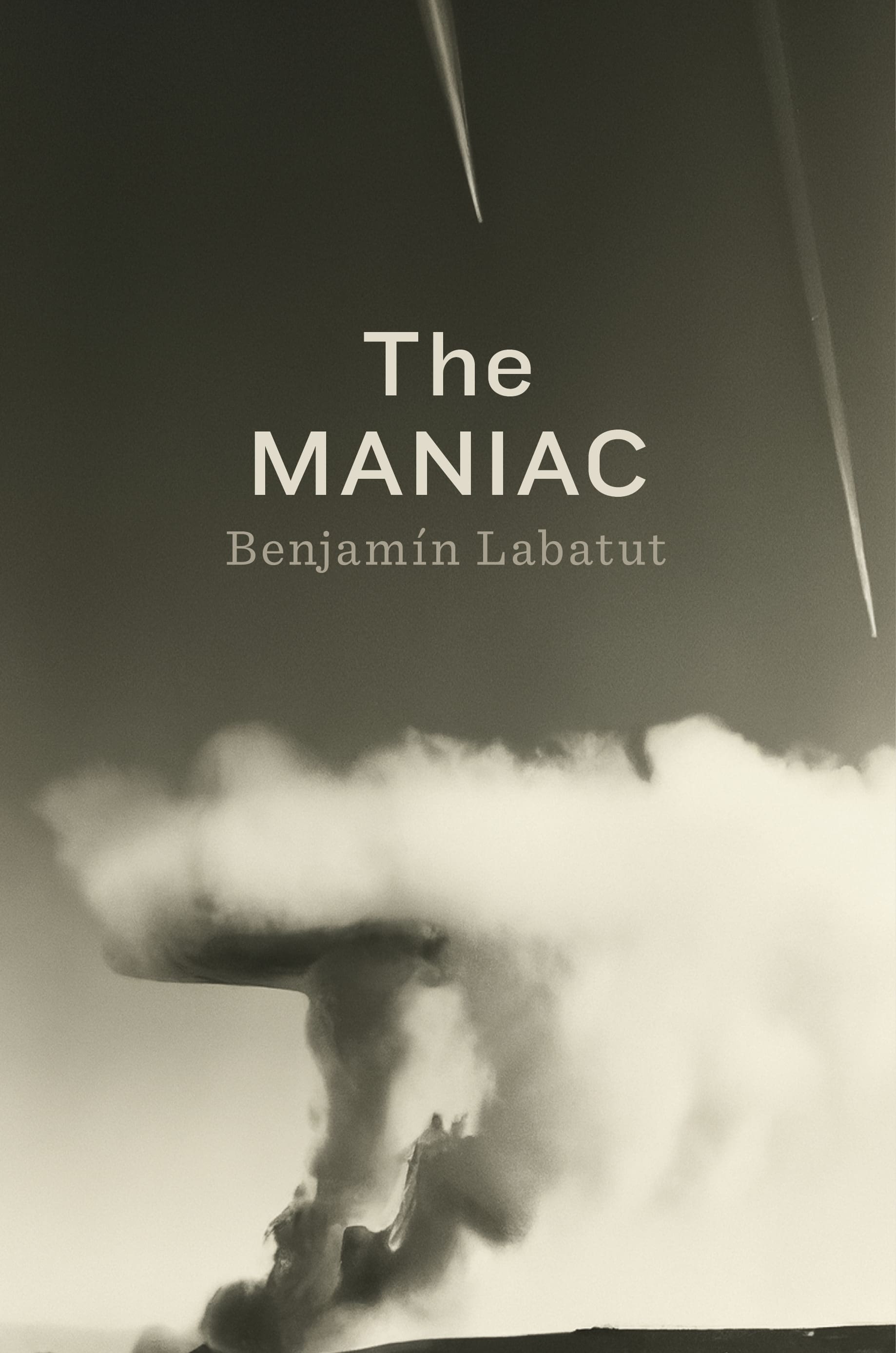
The menacing potentia of frontier physics is at the heart of When We Cease to Understand the World. In The Maniac (like Labatut’s last, “a work of fiction based on real events”) we’re given a terrifying exemplar in the inexplicable figure of John von Neumann. Very little can be said about von Neumann that hasn’t already been said and doesn’t risk understatement even in hyperbole. He is a man of seemingly infinite superlatives (“the smartest person to ever live,” “an alien among us,” “only he was truly awake”). He is someone about whom everyone has a story—about some flash of brilliance or display of dismaying intelligence. Some of these are likely to be apocryphal, and it is from this fusion of fact and fiction that the novel takes its anecdotal approach, which is both factual and speculative, historical and philosophical.
Its polyphonic narrative is supported by a chorus of voices—Richard Feynman, Eugene Wigner, Julian Bigelow, Neumann’s brother Nicholas, Klára Dan, his wife, his daughter Marina, and others. In some ways this reflects the collaborative nature of modern science, but more than that, it allows Labatut to shake any presumption of objectivity; the writer is able to disappear into his characters and thus give their speculation free reign. It also allows Labatut to smuggle in resonant details. For example, he has von Neumann playing Go with Richard Feynman during one of his visits to Los Alamos, something that seems not to have happened, but which gives us the lede for the novel’s final section.
These liberties are not just structural, but foundational to what Labatut seems to be trying to achieve. The question many are inclined to ask of Labatut’s work is: “is it fact or fiction?” The response seems to be that such a question is uninteresting–indeed, uninterested in how at a certain point these distinctions reveal themselves to be specious. Unlike historiographic metafiction or other postmodern games, there is a very un-self-conscious aspect to the way Labatut works. He never draws attention to his own operations. In reading, we don’t revel (at arm’s length) in the play of authorial invention; instead, we surrender to a world in which we are made to question the very foundations of what we can bring ourselves to believe.
The following, however, we can claim as fact: Neumann Janos Lajos was born on December 28th 1903 in Budapest to a family of affluent Jews. A wunderkind, he could apparently memorize a page of a telephone directory at a glance (his parents would often bring him out at parties and have him perform it as a kind of trick for guests). He had a command of multiple language before his adolescence (it’s rumored that he taught himself ancient Greek in an afternoon), had learned calculus and could divide two eight-digit numbers in his head by age six, and by the time he was twelve he had already passed through Borel’s Theory of Functions. He seemed to epitomize the prosperity of the assimilated Jewish haute bourgeoisie in the late days of the Austrian Empire. His father, a banker, was given a hereditary title by the Emperor Franz Joseph for financial services to the state, thus acquiring the noble preposition “von.”
Of course, one can’t look at the vanguard of science in the early 20th century without considering the fate of European Jewry. The German-speaking imperium produced the bulk of the century’s greatest scientists and mathematicians: Einstein, Heisenberg, Schwarzschild, Fritz Haber, Paul Ehrlich, Hans Bethe, Max Born, Theodore von Kármán, Edward Teller, Leo Szilard, and von Neumann (the last four all Hungarians), to name a few. Europe underwent a collapse of rationality in the interwar years, not least of all in its politics, as the world suddenly became strange. It was Jewish thinkers in particular who set this strangeness upon the world: Freud diagrammed the strangeness of the subconscious; Wittgenstein the strangeness of language; Einstein showed the strangeness of the cosmos on the large scale and Heisenberg the strangeness of the small. Hitler would later denounce the latter as “Jewish Science,” though that didn’t stop the Nazis from appropriating it.
In the late 1920s, as the Nazis were growing in popularity, von Neumann was lecturing in Berlin and Hamburg. At that time, he was interested in establishing concise axiomatic principles on which all formal proofs could rest, and was convinced that unlike Bertrand Russell and Alfred North Whitehead’s Principia Mathematica (1910-13)–the most influential text in this field up to that point–which took nearly 2,000 pages to do this, he could fit these axioms on the back of an envelope. He was disarmed, however, by Austrian physicist Kurt Gödel’s Incompleteness Theorem, which showed that there will always be true statements that cannot be proven in a formal system; and by the same token, inherently contradictory axioms that can be demonstrated with proofs (i.e. it is possible to prove “this statement cannot be proved” in the form of an equation). Never again would mathematicians be able to dream of indelible, unified foundations. It was at this point, Labatut has Eugene Wigner say, that von Neumann entered “a treacherous wilderness, where he ranged beyond what was reasonable, until he finally lost himself… he became more practical and effective than before, but also dangerous.”
Von Neumann began making trips to America as early as 1930 and in 1933 was hired at the Institute for Advanced Study in Princeton, New Jersey, the so-called “intellectual hotel” that helped transfer mental capital from Europe to the United States during the interwar years. Von Neumann worked as a consultant on the Manhattan project, doing implosion equations for the bombs’ uranium and plutonium cores, but was never stationed in the desert with his colleagues. After the war, he was assigned to the Atomic Energy Commission, chaired by Rear Admiral Lewis Strauss (he of the Oppenheimer witch hunt), a nest of hawks whose insistence on building hydrogen bombs of greater and greater magnitude defined America’s Cold War policy in the 1950s.
Von Neumann’s gamified vision of the world, first laid out in his Theory of Games and Economic Behavior (1944), was that zero-sum games (in which one player has to lose in order for the other to win) are not worth playing, and thus the approach to a nuclear stand-off should be to amass as many weapons as possible so as to establish a game cannot be played without ensuring the loss of all players. It was the guiding logic of deterrence in the earlier days of the Cold War, the appropriately named M.A.D. doctrine, a kind of rational insanity elucidated by a man whom by that time many regarded as equally mad. Johnny, Labatut has Oskar Morgenstern say, was “a modern oracle… a babbling sibyl swept up in a trance.” He advocated for a surprise first strike against the Soviet Union and waxed speculatively on how humanity would survive after nuclear fallout; obsessed with instruments of terror, he even theorized that one could model the global climate in order to weaponize the weather. Such an outlook, Morgenstern says, perpetuated a “labyrinth of terror” between the U.S. and the Soviet Union, and could only have come from someone whose “vision of human beings was grim and cynical.”
The MANIAC, in this case, does not actually refer to von Neumann, but rather the acronym for the Mathematical Analyzer Numerical Integrator and Automatic Computer, for which he developed the architecture. The calculations for the hydrogen bomb were so complicated that a more advanced “computer” (which at that time meant desks of human beings with calculators and yellow paper) was needed to handle them. The size of a kitchen unit, the MANIAC ate dimpled tape and weighed over half a ton, with a five-kilobyte memory (how quaint), thousands of vacuum tubes, crystal diodes and transistors, and millions of hand-soldered joints. The first task it was given was calculating the explosive yield of “the Super” (the hydrogen bomb) in the summer of 1951. The following November, Ivy Mike, the first thermonuclear weapon, was successfully detonated in the Marshall Islands based on the MANIAC’s approval of the equations. “Those cursed things came alive within the digital circuits of a computer before exploding into our world,” Labatut has Feynman say. “The most creative and most destructive of human inventions arose at exactly the same time… spurred on by one man’s monomania.”
In his final years, as he was dying of cancer, von Neumann began speculating about self-replicating automata and digital organisms. He became consumed with “symbiogenesis”–the idea that digital organisms would one day be able to replicate themselves, thus “giving birth” to new generations of higher and higher intelligence that humanity, robbed of gods in the secular age, could exalt as new deities. Labatut dramatizes this in a scene where Wigner visits von Neumann in the middle of the night; he finds him in his office, drunk, tefillin around his arm: “‘We have no guiding star,’ he told me, ‘nothing to look up or aspire to’… we needed to fill the void left by the departure of the gods, and the one and only candidate that could achieve this strange, esoteric transformation was technology.” A personal God, von Neumann argued, in fits of sick delirium, was a “biological necessity;” our survival as a species depended on examples of a higher life to which we could aspire.
In early 1957, he lay dying in Walter Reed Hospital in Washington D.C. The door to his room was guarded by armed soldiers, while others were ordered to stand by the bed, partly to prevent von Neumann (who was known to talk in his sleep) from uttering state secrets mid-hallucination. Attending him also were the Secretary of Defense and his deputies, the Secretaries of the Army, Navy, Air Force, and the Joint Chiefs of Staff, all desperate for his last, classified breath. (The scene recalls Alexander dying in Babylon, his generals leaning over his lips, waiting to hear who would inherit his empire.) After he died, the American government even proposed to have his brain dissected–as they had done with Einstein–to see what lurked inside.
Labatut has described fiction as a “tool” for understanding the world, a kind of method, not unlike science. Literature, he has said, is an act of discovery, not invention, and one sees this in what must be his densely research-driven process, in which resonant connections emerge through prolonged investigation and accumulation of material: they aren’t fashioned–they arrive. Again, the point at which these connections cease to be factual and take on a fictional dimension is not always clear and it is part of what makes his work so fascinating. Rarely in The Maniac is the reader compelled to ask, “But is this really true?” Not simply because it would break the spell, but because to ask the question in this case would be misguided. The “suspension of disbelief” that is the price of entry for fiction (and which now belongs equally to modern physics) breaks out of the text and infuses our whole sense of reality; for modern science is often stranger than fiction.
Von Neumann, who provoked disbelief in almost everyone who met him, is the perfect illustration. To this day, he remains a kind of black box, totally inscrutable. The terror of an intelligence we don’t understand is one of The Maniac’s most pressing questions. Indeed, one of the things Labatut seems to be encouraging us to ask is: if we are incapable of having total knowledge over our own minds, let alone the minds of others, how can we ever expect to know a foreign mind? Why should we presume, therefore, that we could understand, or contain, an artificial intelligence? We know that human intelligence is enigmatic and dangerous, so why should an AI be any different? More still, what assurance do we have that such an intelligence will not be animated by its own kind of irrationality, its own inspired madness?
Alan Turing originally speculated that not only would computers be able to think–they would also be able to use intuition; they would make mistakes and be capable of seemingly nonsensical things. We get a glimpse of this in the novel’s final section, a kind of epilogue, about Korean Go champion Lee Sedol’s match against AlphaGo in 2016. “Go has a strange charm. It takes over your mind,” Labatut has Feynman say in an early chapter–“It requires a particular type of intelligence and it’s really intractable to computation, you have to feel your way around the board. It’s spellbinding and unsettling…” The match between Lee and AlphaGo was remarkable for a number of reasons: not only did AlphaGo perform beyond expectations, it played moves that seemingly made no sense to its designers, the analysts commentating on the game, and least of all, Lee himself. But this, they later discovered, was simply a failure in their own understanding of the game (all moves had been carefully calculated), which AlphaGo now understood better than anyone.
We’ve long had an uneasy relationship with genius. Always a little beyond our comprehension, we recognize its terrifying potential. The pursuit of AI in many ways reflects our desire for uncomplicated intelligence, one that is unmysterious, convenient, predictable (this certainly, is the bored, incurious relationship we have with our current “smart” devices) and which doesn’t bear the “divine spark” to which genius has been attributed for millennia, thus discarding the notion that great ideas don’t belong to us–that they come from somewhere else. The experience of epiphany is a Christian concept that fiction inherited; as Labatut shows us, it belongs as much to science as it does to literature. Many of the characters in his work (Schwarzschild, Schrödinger, Heisenberg) arrived at their discoveries in just this way, through some kind of possession or derangement of the senses, as if the door of the universe cracked open for a moment, offering a glimpse into the abyss before once again slamming shut.
Labatut suggests that one shouldn’t seek to understand the world too much, for the mysteries that lie at the end of our investigations can imperil us. When We Cease to Understand the World ends with Labatut’s gardener telling him that he had abandoned mathematics in favor of tilling the land, as a kind of renunciation of our species’ “uncontrolled, devastating growth.” This image (literally cultivating one’s own garden) is the same note on which Candide concludes, after the naïf suffers the cruelty and indignity of his education out in the world. Indeed, many of the greatest minds in science and mathematics turned away from the world, renounced their discoveries, or went mad. Ehrenfest “could no longer distinguish any type of reasonable order to the universe… just a vast, sprawling word without measure, riddled with chaos…” Gödel’s “mind began to warp and twist… He also started seeing ghosts;” developing a paranoia of dying by poisoning, Gödel would starve himself to death. Grothendieck demanded his work be destroyed and became a hermit, dying in a little village in France, where no one knew his name. All of these men were unable to cope with the apparent paradox that it was not the sleep of reason, but its dreams that brought forth monsters. They were unable to cope, that is, with the 20th century itself.
Von Neumann gave himself over entirely to this project, which “took him past despair and pushed him beyond logic.” He behaved like a man not bound by ordinary morals, never showing a morsel of angst or unease—unlike Oppenheimer, who (with his scripturally adorned grief) was legendarily contrite. Oppenheimer argued that the advent of atomic weapons would require a higher morality in order to wield, that we as a species would need to grow up at an accelerated rate in order to handle what we had unleashed. The same claim, I think, can be extended to digital technology, the potential of which we cannot yet know. There is an argument to be made (re: Nietzsche) that true genius is beyond good and evil: it creates its own vision of the world and answers to no one. Our intelligent machines might someday rise to this level themselves. At which point we will once again find ourselves facing the promethean gambit: taking hold of that for which we are not yet ready in order to know ourselves, and in doing so, risking our own destruction. Will we be able to reckon with what they bring into being? How could we, when we are still reckoning with the strange Hungarian who first envisioned them?♦
