

An independent, ad-free leftist magazine of critical essays, poetry, fiction, and art.
-

On World-Building: Lessons From a Martyred Teacher
Bayan Haddad once taught literature to Oudeh Hathaleen, who would become a teacher himself, as well as Palestinian community advocate and consultant on the Oscar-winning documentary No Other Land. In July, Oudeh was murdered by an Israeli settler. Haddad reflects on the lessons taught by colonial violence.
-
![We Had it Coming [EXCERPTS]](https://proteanmag.com/wp-content/uploads/2025/10/We-Had-It-Coming-cover-3.jpg)
We Had it Coming [EXCERPTS]
Three new short stories by Luke O’Neil—”The rules,” “How to live,” and “Something that was once potentially good”—are excerpted here from his new book of stories, We Had it Coming, out from OR Books.
-
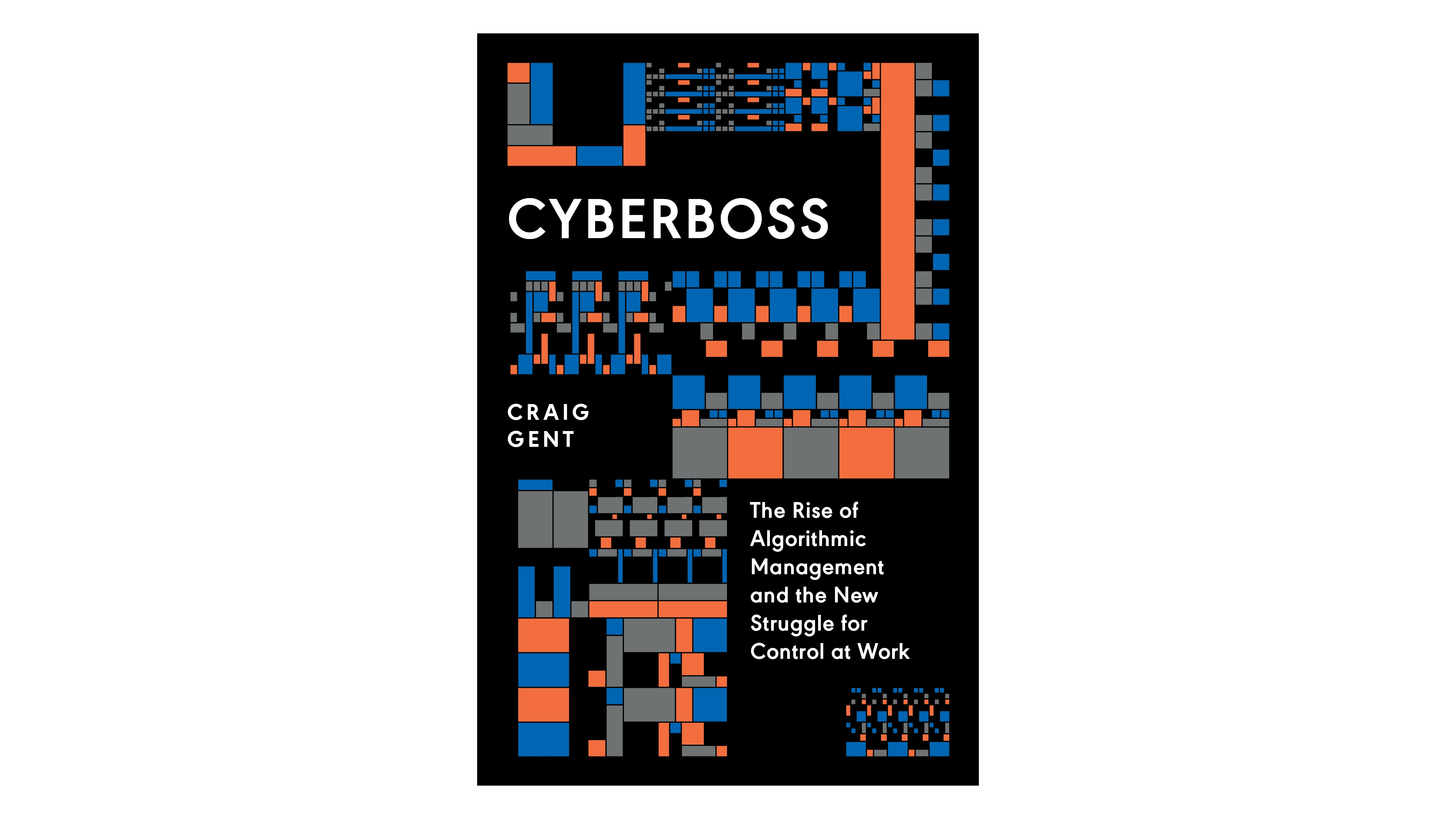
The Workplace Arms Race
Shane Boyle reviews Craig Gent’s Cyberboss: The Rise of Algorithmic Management. “Rather than representing a step towards scientific perfection, algorithmic management is simply the latest episode in capital’s interminable struggle to subjugate labor.”
-
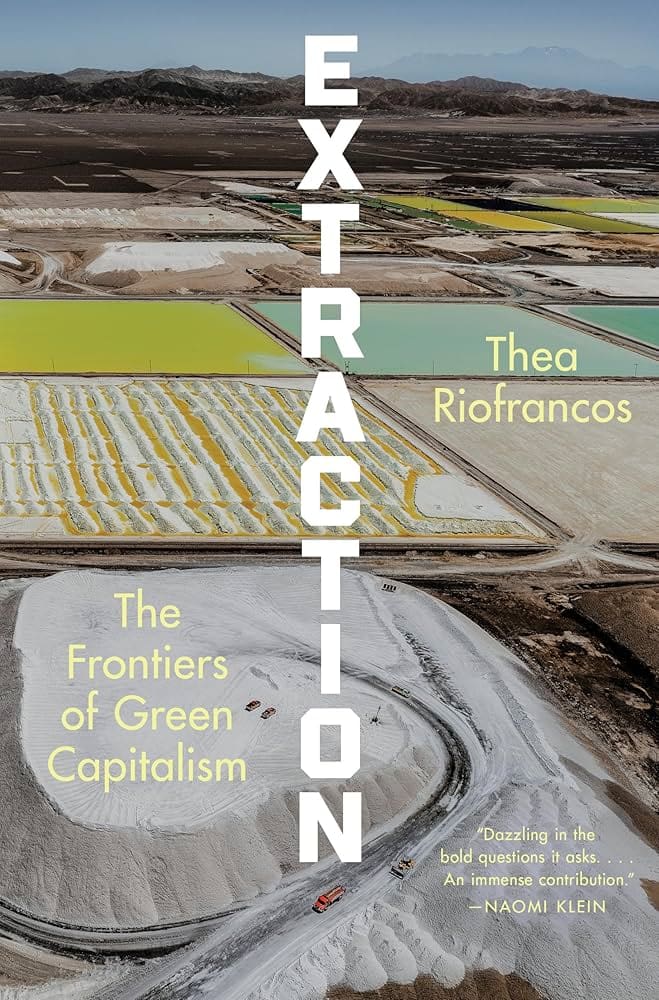
Extractive Frontiers: An Interview With Thea Riofrancos
In this extensive, wide ranging interview, Laleh Khalili speaks with Thea Riofrancos about her new book Extraction: The Frontiers of Green Capitalism, the political economy of lithium mining, the possibility of a just climate transition, and more.
-

Live Action Role Play
In “Live Action Role Play,” poet Christopher Blackman considers the linkages among LARPing, imperial decay, and the splendor of a full moon.
-
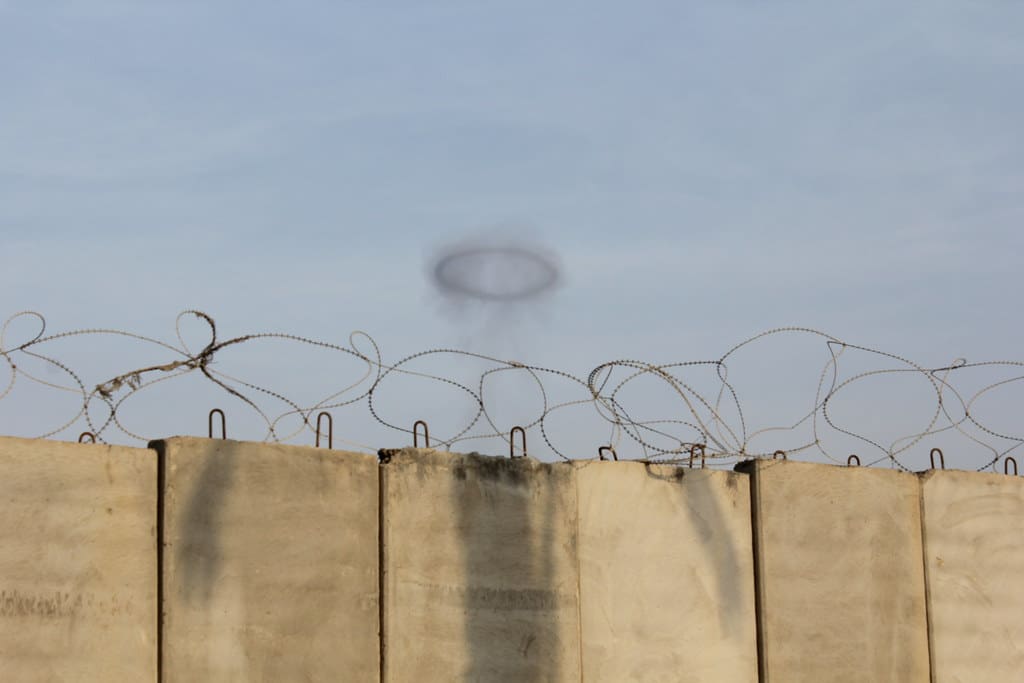
Threadbare in Rafah
Poet Ahmad Ibsais’s “Threadbare in Rafah” narrates the steadfastness of Palestinian children against the unimaginable terrors of Israel’s genocide.
-
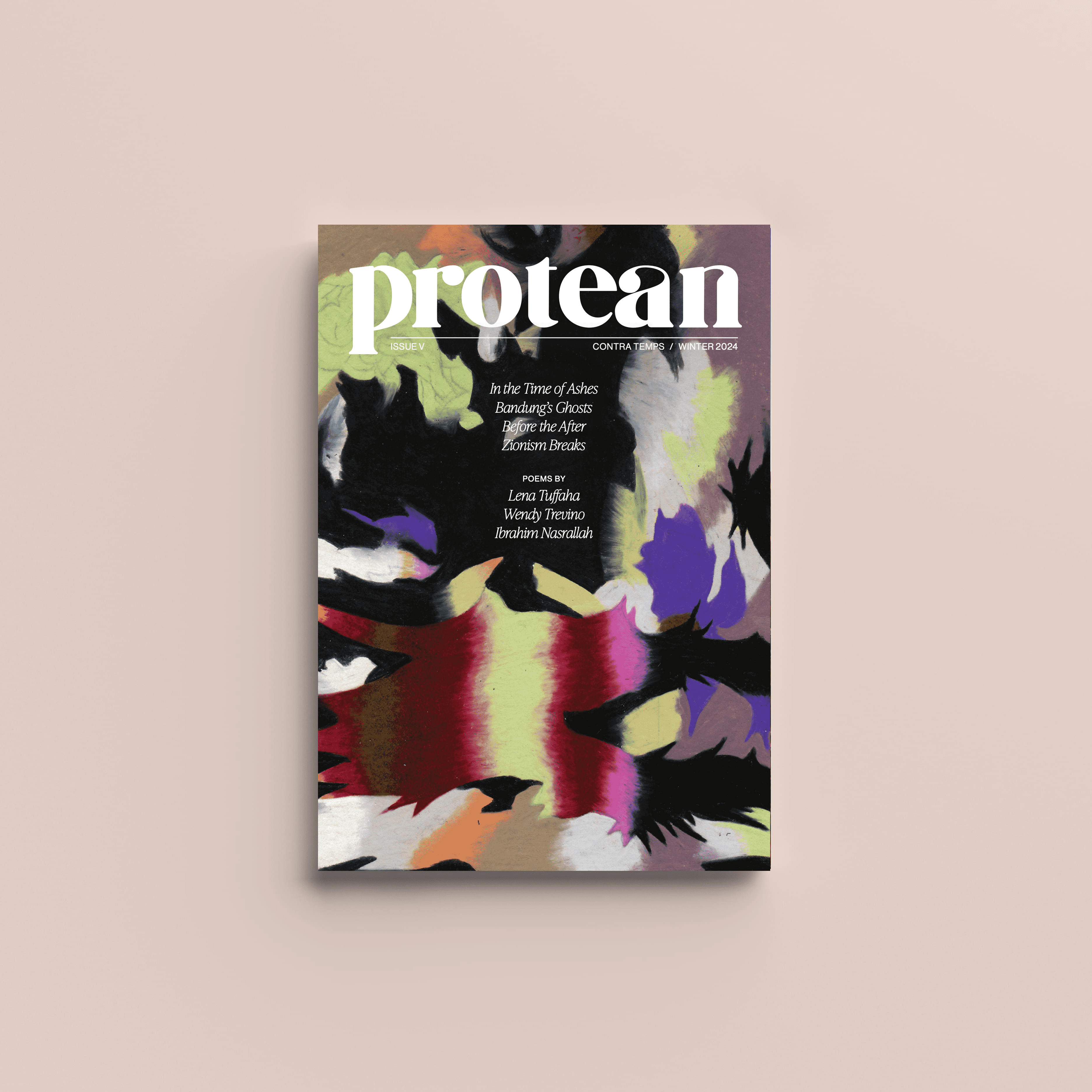
The Latest
Protean Magazine Issue V: Contra Temps
-
The Workplace Arms Race
Shane Boyle reviews Craig Gent’s Cyberboss: The Rise of Algorithmic Management. “Rather than representing a step towards scientific perfection, algorithmic management is simply the latest episode in capital’s interminable struggle to subjugate labor.”
-
Horizons of Youth Liberation
Sarah Brouillette reviews Madeline Lane-McKinley’s newest book, Solidarity With Children, from Haymarket. Lane-McKinley’s text conceptualizes the full scale of injustice perpetrated against children worldwide. By invoking Marxist-feminist theory, interpreting cultural texts, and critiquing sociopolitical conditions, Lane-McKinley surveys the horizons of a world in which children are no longer regarded as…
-
A History of Violence
Noah Kulwin reviews Seth Harp’s new book, “The Fort Bragg Cartel,” tracing the historical continuities between Vietnam War-era drug smuggling operations and the overwhelming present-day criminality taking place at the Fort.
-
Incendiary Schemes
Charlotte Rosen reviews Bench Ansfield’s new book, Born in Flames—a stunning and revelatory analysis of the systematic, profitable, and deadly arson schemes that were perpetrated by landlords and insurance companies in the Bronx during the 1970s.
-
Romance of the Class Traitor
Urvi Kumbhat reviews the new novel from author Vivek Shanbhag (trans. Srinath Perur). Originally written in southwest India’s Kannada language, Sakina’s Kiss has been republished in the U.S. by McNally. Trading keenly on romance tropes and genre signifiers, Shanbhag uses the figure of the class traitor to turn up bourgeois…
-
Yugoslavia at Scale
For more than a century, socialists in South East Europe strove to enact their politics at a scale between the national and the global. Jonah Walters reviews James M. Robertson’s Mediating Spaces, a new book that describes the rise and fall of the supranationalism in the Balkans by examining the…
-
In this extensive, wide ranging interview, Laleh Khalili speaks with Thea Riofrancos about her new book Extraction: The Frontiers of Green Capitalism, the political economy of lithium mining, the possibility of a just climate transition, and more.
-
Andrew Holter interviews Mitchell Abidor on Abidor’s new book, Victor Serge: Unruly Revolutionary, out from Pluto Press. “It seems like we in the English-speaking world, at least, have misunderstood some pretty important things about him”—including what Abidor argues was his late-life turn to reactionary anti-communism.
-
Dialogue with the revolutionary philosopher Divya Dwivedi is never a neutral interaction. As we spoke with Dwivedi, she was facing death threats on social media platforms, including of threats of decapitation and calls for funding assassins. Concurrently, two prominent English-language Indian media outlets, India Today and News18, published articles depicting Dwivedi and her associates as…
-
Mallika Singh interviews poet and organizer Lupita Limón Corrales, whose new collection, ESTA BOCA ES MÍA, has now been published by nueoi press. Corrales’s poems, Singh writes, are “a testament to the dissolution of self, to the collective voice.”
-
Writer and translator Alex Tan speaks to renowned Gazan poet Nasser Rabah on his new collection, Gaza: The Poem Said its Piece, selected and translated by Ammiel Alcalay, Emna Zghal, and Khaled Al Hilli.
